Welcome to WordPress. This is your first post. Edit or delete it, then start writing!
Author: admin
-
COUNTING THE COST: THE SCHOOL PLACEMENT SYSTEM MUST BE REVIEWED
Initially, placement was performed manually, with school heads gathering at a centralized location to make the selection. At the placement centre, school officials are only interested in candidates with the highest grades. This system presented formidable obstacles. First, headteachers became excessively corrupted by the system because they accepted money to fix students who did not choose their schools. Second, lower-grade schools have little or no choice but to select from the handful of average grades left by so-called elite schools. School administrators automatically implemented cut-off points, leaving behind a large number of students in grades 30 to 48. Sadly, the majority of BECE candidates scored between 30 and 48 points. It suggests that more BECE graduates were left without secondary education. The backlog of BECE candidates without secondary education grows each year, and the situation was becoming a national security risk. A low rate of literacy posed a threat to the population, and the consequences were dire.
In light of this, the Computerized School Selection and Placement System (CSSPS) was implemented primarily to remove the impediments presented by the manual system and promote some level of fairness for public school candidates who barely have the opportunity to enrol in first-rate secondary schools. The CSSPS has proven to solve some of the issues that the manual system presented and to increase the efficiency of school placement. The structure and computer processes ensure that the cut-off point that caused the candidate distress and prevented them from receiving a secondary education has been eliminated to some extent. Simply put, the CSSPS expanded access and increased the senior high school population. Unfortunately, the CSSPS is becoming an untrustworthy nomenclature for candidates and stakeholders.
Each year, the CSSPS faces a unique set of obstacles and system failures. At first, CSSPS placed candidates with the highest grades in their first choice, and vice versa. Review after review has revealed that the CSSPS has a distinct threshold to promote greater fairness. The question has been how a computerized system could result in unprecedented placement disputes every year, leaving parents desperate and frustrated. Even more frustrating is the fact that schools are given some system control over the entire process. Thus, the extent of human manipulation within the CSSPS indicates that the computer-generated placement cannot be relied upon entirely going forward. The disorder, errors, and mishaps cannot be the attitude of a computer that has been programmed to perform specific tasks. This involvement of humans in the CSSPS has led to corrupt activities that eroded the manual placement system. From fraudsters to school heads, the CSSPS has been subjected to money laundering, in which parents who are told that their children’s education is free must pay between ₵5,000 and ₵8,000 for placement in good schools.
The human manipulation in the CSSPS is not only a threat to impartiality but also poses a significant threat to the Free SHS program. The CSSPS enables the placement of students in schools without a required cut-off point but given the current difficulties that do not appear to be resolved in CSSPS, self-placement candidates may be dissuaded, and many may feel cheated. Again, the 30% allotted to public school candidates in top-tier schools indicates a lack of competition. A clear indication that public school candidates continue to lack quality and better performance. In a more dire scenario, the pervasive corruption within the system also indicates that the management body has failed to protect the system from vulnerabilities. These loopholes continue to widen year after year, compelling parents to participate in the ongoing corruption. Soon, we will return to the era of the manual system, where only the wealthy can enrol their children in elite schools. The quota system favours the wealthy over the underprivileged.
So, what is the future of CSSPS if the current challenges continue? It is unclear what Management is doing to address the situation. This is because the same complaints, if not more, surface each year during the placement period. There has never been a year when the CSSPS did not receive negative feedback. It is past time for Management to call a meeting to address CSSPS issues in the form of reviewing it. Management has the option of decentralizing the placement system. Since Management wants candidates to attend schools in their catchment area, each region must have its CSSPS. Students who do not want to cross regions will have to use their region’s CSSPS. Those who wish to cross borders must apply for a specialized ‘Quota CSSPS,’ which may be limited to a small number of candidates. If management wants to promote fairness, increase access, and promote free education, the CSSPS’s current situation may not be effective in achieving those goals. CSSPS must be reviewed as soon as possible to ensure a problem-free placement system in the future.
Isaac Ofori
-
SAVING THE QUALITY OF GHANA’S BASIC EDUCATION – THE MISSING LINK
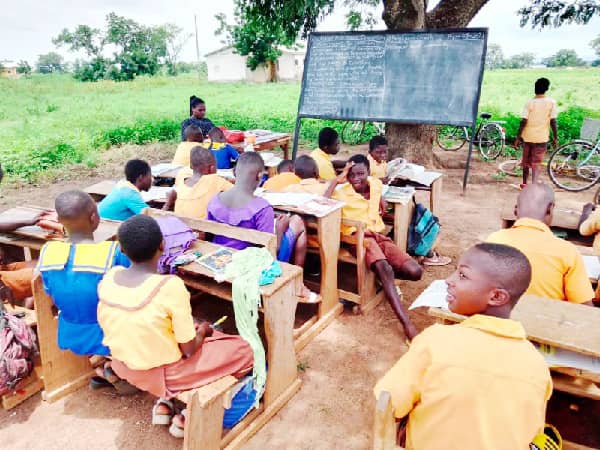
Recently, the quality of basic education in Ghana has been a topic of dialogue, and renowned professor Addae has ignited the greatest dispute ever. The resistance of academicians and other professionals to Professor Addae’s proposal to fire and rehire all basic school teachers and headteachers was evident upon hearing their thoughts. Their argument was based on two premises: if basic school teachers are fired and rehired without more resources, the same outcome will be attained, and what is the guarantee that firing and rehiring all teachers, directors, etc. will result in improved quality? Even though Professor Addae was extremely confident in his plan, it is uncertain whether the quality of our basic education might be improved or rationalized based on his “Radical Proposal approach.”
To contribute to this discussion, we must examine the issues from a variety of viewpoints on innovation, best practices, and stakeholder engagement. The government of Ghana, through the Ghana Education Service, has been unable to implement any type of innovation to address the fundamental problem confronting basic education. To the extent that extra efforts to improve the system are barely noticeable, everything appears identical. There is little desire for GES’ inventive abilities. In addition, GES had failed for years to implement best practices in our schools. I am aware that the condition of infrastructure and resources is impeding best practices. The existing resources are insufficient to meet the demands of schools, let alone sustain everyday operations. Lastly, stakeholder engagement has been a top approach. GES is solely interested in the engagement of elite stakeholders and does not necessarily regard the downward approach. Due to the centralization of GES management, the Parents-Teachers Association (PTA) has recently had its authority usurped and its supervision responsibilities withdrawn from the school management committee.
The approach of Professor Addae centred on decentralization, responsibility, and supervision. I can state that, despite infrastructural issues, GES continues to innovate, however, the impact is limited and more work is required. Again, best practices in Ghana’s primary schools are subpar, although in urban schools there has been significant progress. The difficulty had been rural schools’ insufficient implementation of best practices. Bottom-level stakeholder engagement is, in my opinion, the missing link that is eroding our basic schools’ quality. GES and even the Teacher Unions cannot be solely responsible for the management of basic schools in Ghana. Parents whose children are managed by GES as an institution have not been fully included in the policymaking and policy decision-making chain over the years. In contrast, the private school administration had made parents accountable for their children, and they complied. Since the constitution mandates free basic education for everyone and the achievement of SDG 4 is non-negotiable, policymakers must involve parents in the management of public basic schools to the fullest.
We can discuss the plethora of problems confronting our education sector and the quality of the human capital it generates, but leaving parents out of the equation represents a limited effort to address these problems comprehensively. The government cannot provide sufficient textbooks, desks, and other teaching and learning tools for more than four million basic and secondary school students. Even with financial support from concerned international organizations, the country’s education sector suffers from a lack of resources, accountability, and supervision.
What crucial role could parents play in mitigating the difficulties? Even though poverty remains one of the most significant obstacles for many parents to provide for their children’s education, it is crucial to remember that many variables that also contribute to this poverty might be mitigated to enable parents to save money on education-related expenses. In rural areas, parents’ inability to fund their children’s education is mostly attributable to factors such as high fertility, the over-prioritization of social activities such as a funeral, and a negative attitude toward savings. Parents could be motivated in any way to make their children’s education a top priority, which is a responsibility they must carry as part of their national duty. Again, the government can boost PTA in peri-urban areas by involving parents in school-related decision-making and leaving them with some obligations that are in no way burdensome. In remote areas where parents struggle to provide their children with three square meals per day, the government can prioritize school nutrition and the supply of teaching and learning tools. Once parents realize that it is in their best interest to provide and support their children’s education, the government will have sufficient space to allocate resources where they are most needed.
Currently, the government cannot supply everything that millions of pupils require. This is not a modern occurrence; it has existed for centuries. Government must reevaluate its innovative abilities and begin to build models that might effectively segregate basic schools so that policy decisions may have a narrative that is derived from the perspective of the parents, as opposed to the current centralized type of management. Once the narrative of parents is eliminated from the equation, no method of supervision, accountability or resource distribution could attain the desired level of quality. This is because the government in its current form lacks the means to handle the rising school population, and enlisting the aid of peri-urban parents in supporting their children’s education will alleviate some of the mounting pressure in the sector.
Isaac Ofori
(ATAG National Chairman) -

CONGRATULATORY MESSAGE TO DR ERIC NKANSAH, DIRECTOR GENERAL OF GES
The All Teachers Alliance Ghana (ATAG) wants to congratulate you on your appointment as the Director General of GES.
The All Teachers Alliance Ghana (ATAG) is a pre-tertiary teacher union that has been in existence since 2016. Over the years, we have not been given enough audience by GES nor are we invited to stakeholders meetings organized by GES.
For some reason, our right as a union has been denied through administrative discretion and we believe we deserve equal rights.
As you promised the Minister of Education of your readiness to work with all stakeholders, we pray you will include ATAG to ensure that together we implement the best policies to ensure quality education at the pre-tertiary level.Albert Dadson Amoah.
(General Secretary) -
ATAG WELCOMES THE NEW DIRECTOR GENERAL – DESCRIBES THE POSTURE OF OTHER UNIONS OVER THE APPOINTMENT AS IMPULSIVE
Fellow teachers, once more GNAT, NAGRAT, and CCT have begun their typical rants, this time mocking the Ministry of Education (MOE) for choosing what they called an unqualified banker to hold the job of Director General (DG). They contend that because Dr Eric Nkansah has no foundational knowledge of GES and does not match the organogram for the career track, he is not deserving of such an appointment.
We find it surprising that teacher unions led by their national officers were unable to conduct background checks and even determine whether this new DG qualifies using employability rather than suitability in this age of knowledge and research. Strangely, they are raising hell over Dr Nkansah’s appointment. Their raving is puzzling since they are disparaging the new DG’s character and giving the impression that he is unfit for the job.
The reason these unions have raised concerns about Dr Nkansah’s hiring is that they claim he is not up to speed on the fundamentals of GES. The unions are acting primarily on impulse rather than factual evidence of intent.We consider their stance absurd and out of step with current logic and accountability. Their upset stem from the believe that Dr Nkansah is a political opportunist who is using the Minister of Education as a prop to rule over alleged “UNION OLD MEN.” Leaders of the three unions were repulsed by the new DG’s age, who is barely 45 years old, and they feel too haughty to be dictated to by a “YOUNG MAN.”
We consider Dr Nkansah’s appointment to be proper and timely, and we base this judgment entirely on the fact that he is employable, not because of any perceived inadequacy. We think he has come to make room for smart, capable young teachers who have been excluded from power structures’ decision-making processes. He deserves our congratulations, and we admonish him to maintain his composure and ignore the everyday impulsive actions of GNAT, NAGRAT, and CCT-GH. When it’s convenient for them, they sing praises; when it’s not, hell must unleash. What connection do teacher unions have to the appointment of the DG? The nomination of DGs is not a matter for teacher unions to decide, and we find the three unions’ actions to be wholly inappropriate and reprehensible.
…signed…
Isaac Ofori
National Chairman
0249403277
All Teachers Alliance Ghana -

COST OF LIVING ALLOWANCE SHOULD NOT BE THE ONLY REASON TO GO ON STRIKE – ATAG
We want to acknowledge the positive agitation that is growing on the teaching front and we welcome the uproar. The cost of living in Ghana is unbearable and this call has come far too late. With this, we give our support to the wind of agitation and encourage every teacher to join the movement to put pressure on the government to do the needful.
However, we find the call to go on strike over “Cost of Living Allowance” as insufficient and cannot withstand the test of time in demanding our rightful place as professionals. The president reiterated that “teachers are not meant to be millionaires” some few months ago and if we want to exert any form of pressure it should not be done on weak fundamentals. We understand the cost of living allowance will only be negotiated within a time frame and once the economy bounced back, the government is obliged to put it on hold.
We have many concerns as teachers. Our conditions of service are poor and we continue to be treated as the second choice among all other professionals. This period is giving us the fine opportunity to once and for all bear our teeth to the government in a manner that will help address all our pertinent and legitimate concerns immediately. We must not put our eggs in one basket and pretend the government will listen to us whilst other serious concerns and issues beg for attention.
(a) We want GNAT, NAGRAT and CCT-GH leaders to understand that negotiating for an increment in our salary is non-negotiable and this is the ripe time to push all our energies into demanding for salary increment once and for all.
(b) We do not think the leadership of GNAT, NAGRAT and CCT-GH is oblivion of the fact that if the COLA is granted, it may force the government not to consider any other form of salary increment since the economy is already bad. The government will be tempted to elude us any form of increment if even if it decides to give us 10% of this COLA which is temporal. Teachers will be happy with a permanent 15% increase in their salary immediately than a COLA that is subjected to a period.
(c) Again, the government through GES has failed to honour certain privileges due to teachers. These privileges include promotion, incremental jumps, study leave with or without pay, re-engagement and other hosts of allowances. We want this current strike to capture these issues as well because our suffering as teachers is partly due to the refusal of our employer to adhere to granting various privileges to us.
(d) We do not think that GNAT, NAGRAT and CCT-GH are encouraging teachers to go on strike to save their image after many threats to the government over the TM1 laptop did not yield results. As it stands, primary school teachers are yet to receive their laptops. Going on strike over one issue is insufficient to put legitimate pressure on the government. Primary school teachers need their laptops from which their CPD allowance had been deducted already for it.
Ladies and gentlemen, the time for real pressure is now and we caution the leadership of GNAT, NAGRAT, and CCT-GH not to sound a wrong trumpet and turn around to blame the government for ineptitude and bad faith.
The time is now for teachers to break the chains of marginalization and unprofessional treatment and we urge every one of us to take his or her destiny into his or her hands rather than relying solely on leaders of GNAT, NAGRAT and CCT-GH that we cannot wholeheartedly trust in fighting the REAL COURSE FOR TEACHERS.ARISE TEACHERS! ARISE NOW FOR YOUR DIGNITY!!
…Signed…
Albert Dadson Amoah
General Secretary -
THE GOVERNMENT IS NOT BEING FAIR WITH THE NEWLY POSTED TEACHERS – ALL TEACHERS ALLIANCE GHANA (ATAG)
We want to state that the government of Ghana is not being fair with the newly trained teachers who had been posted to various places of their service since February 2022. Six months down the line, these newly trained teachers are yet to receive their identification numbers and let alone go to the ministry of finance to take their biometrics for onward payment of salary. In times when public sector workers are crying for Cost of Living Allowance (COLA), the government has largely remained deaf ear to all appeals.
Sadly, we have left these young professionals to struggle in the face of general hardships prevailing in the country. Some of them can hardly meet their daily upkeep whilst others are resorting to excessive borrowing to survive. This is affecting them both psychologically and economically and affecting their quality of state of mind. Many of these young professionals are starving at their various stations and the level of economic and psychological torture is unbearable for them. It is sad teacher unions had remained silent knowing very well that it is not easy for these young ones. Since 2017, newly trained teachers had been paid three months after postings, so what is going on this time around?
The government’s call for quality education will virtually become a mirage because it lacks the necessary urgency toward pressing issues that confront the sector. Educational policies and infrastructure development cannot alone give us the necessary positive impact if we treat teachers with this level of contempt. All the good efforts of the government towards achieving world-class educational quality and meeting the Sustainable Development Goal (SDG) 4 will crumble when teachers are treated as an afterthought in policy making and implementation.
We appeal to GES and the Ministry of Education, with all due respect, to as a matter of urgency, attend to the predicaments of these newly trained teachers who had been left hopeless and suffering in their various stations. Government should not wait to hear some of them lose their lives out of frustrations or sinking into perpetual desperation before moving to their rescue. The country’s economic situation is not good for every public sector worker and if we should leave these new professionals in their current situation, we deny them their rights and treat them unfairly for no fault of theirs. The government had no justification whatsoever to say he has no money to pay these newly posted trained teachers on time rather than leaving them suffering against their will. We maintain that it is not fair.
…Signed…
Albert Dadson Amoah
General Secretary
0509639374 /0249403277/ 0543981951 -
ATAG IS HERE TO MAKE A DIFFERENCE
Unionism is all about the welfare and progress of members. When unionism becomes an institution, members don’t feel the impact of their belongingness. For this reason, we in the All Teachers Alliance Ghana (ATAG) has pledged our commitment of ensuring that WELFARE becomes our core mandate to support the wellbeing of our members.
We are offering an alternative for your progress as a teacher. With ¢25 monthly welfare contribution (mutual fund), you can be sure of enjoying the most important union treat ever in your lifetime.As a union and with the power to make life comfortable for our members, we have crafted policies that are solely geared towards the welfare of our members such as maternity leave allowance, sick leave access, you-decide hire purchase, low interest rates on loans and still adding.
With our 8% annual interest rate on every loan amount (will reduce further when membership increases), you have a choice to chance on the best opportunity to ease the pressure on your salary. ATAG is here with the mission of ensuring members are empowered and that the teacher must always be the reason why a union must exist.
Join us through the www.gogpayslip.com and become part of the BEST WELFARE COMMUNITY UNION and you will never regret it.
Read more on our website www.atag.org.gh or send us a mail atag.gh@gmail.com or call 0241871847 for more enquiries.
ATAG! Be Empowered
ATAG!! Empowering Teachers
ATAG!!! The Teacher is the Reason -
ATTENTION TEACHERS! IF IT MUST BE DONE, IT MUST BE DONE NOW
Teachers are always deceived into believing that they will be destitute during their pension days. These deceptions force many of them to unwillingly join or get trapped in certain unions funds or insurance company policies. To them, they will get extra money in addition to their Tier I and II to overcome this so-called “pension destitution”. So we ask teachers about “What is the living condition of teachers who are on a pension and their state of living?”. Some of them had finished squandering their pension money within a short pace because they will either have a house to renovate or children yet to complete their education to cater for or build a new home or had invested in a wrong business. It’s a gospel truth that ¢30,000 in the next ten years will devalue to ¢10,000 or even less. So if all your weight is on pension return as a teacher then you might be missing some real opportunities in terms of which union you must join.
For instance, why would some teachers accept to be deducted ¢100 monthly in the name of union contribution and get an interest rate of 16% or more annual on the loan amount? They claim that the said union is more than secured and you will get a pension package when you are leaving the profession with them. This is serious. This kind of choice determines why some teachers cannot make use of real opportunities. Let me enlighten any teacher reading this piece of information. For example, you decide to go for a loan of ¢20,000 from this your union deducting you ¢100 monthly with a rate of 16% for 3 years. The interest on the amount is ¢9,600 for the 3 years. If you stay with that union all your entire teaching life and you go for ¢20,000 some four times, it means per the interest on the amount (¢9,600) and all things being equal, you will be paying ¢38,000 in all on the ¢80,000 total amount (20,000 four times). So if you go on pension and that union tells you you are entitled to some ¢30,000 dividends on your entire contributions, indirectly it is your own money that has been saved for you in the form of the interest you have paid (this amount will have lost significant value as well by then)
It’s not that teachers do not have alternatives, they do but the problem is trust and the ever ringing deception of pension destitution. What’s trust? There’s no union on the payslip that can be classified as not trustworthy. Because CAGD will not allow fraudsters or scammers to mount their platforms. CAGD has a good system in place to check all these things. The mischief and lies have been that some unions are not credible. Close your ears to childish admonitions and listen to how you can cash on every single opportunity.
If a union is deducting ¢100 monthly, remember there’s an alternative that’s lower deducting ¢40 monthly. The ¢100 union is giving a loan at a rate of 16%, the alternative is giving a loan at a rate of 8%. In principle, given the opportunity cost, which one should be your best bet, the ¢40 monthly deduction stands a sure bet. This good opportunity is mostly ignored by teachers and they keep themselves stuck in a particular union with the mindset they will get pension remuneration or the union is a mother and trustworthy. Remember, unionism is all about the welfare of the teacher, so if you can be served better now and you can do everything you want to do before pension, what’s the big deal. If it must be done, it must be done now.
We in the All Teachers Alliance Ghana (ATAG) is offering the best opportunity for the teacher as a sure alternative to all your misery and frustrations. We believe in the welfare of teachers and our policies had been tailored to ensure that our members enjoy the best of the opportunities whilst in active service. We are committed to giving welfare loans at 8% annual interest and even reducing it further to 5% if more teachers put their trust in us and join this biggest welfare train. Our motive is geared toward making the teacher the centre of attraction and not a certain institutional structure. Join the All Teachers Alliance Ghana (ATAG) and let us together forge a common future of total and true welfare and in seeking total financial freedom for all teachers. ATAG! The Teacher is always the reason.
Visit our website www.atag.org.gh or send us a mail atag.gh@gmail.com or call us on 0241871847
-

ATTENTION MILLIONAIRE TEACHERS!
As a teacher you have been told by President Nana Addo that you cannot be a millionaire. I want you to reject this negative confession and listen to this new hope.
When you want to become rich as a teacher, you need some level of financial freedom whilst in active service.It is important to note that your affordability and access to loans are non-negotiable. Note also that you don’t need to put all your weight on pension money because pension money cannot guarantee you the best financial security in Ghana and in Africa as a whole.
Your focus is to maximize the best opportunity that comes to your table and make good use of it.
Many deductions go on our payslip that enable us get affordability to access loans. To get affordability, some deductions must be blocked or stopped to your advantage. Now you must consider the most important deductions too.Union dues and funds are one of the important deductions. They are important because they allow you to access quite a lower rate loans. With this too, you MUST BE SMART and choose the one that will serve your current needs not the future. YOU KNOW WHY, TIER I AND II ARE FULLY WORKING OUT YOUR PENSION NEEDS. So there’s no need to add up another pension need because your financial obligations keeps on increasing everyday.
Here is a financial wisdom. Some unions dues+fund put together is too high and that affect your affordability by 25-30%. These unions are also offering loans at a rate between 16-45% (1-3yrs). Others have dues + fund put together affecting only 2-5% of your affordability and offer loan between 8-24% (1-3yrs).
As a teacher, you must first consider your BEST INTEREST. Unions provide welfare services, they neither pay teachers nor remunerate them. It does not matter which union you belong to, you are all treated the same by the government. Never have we heard the government is paying some union members more than the others. So close your ears to ill childish propaganda.
Thankfully, controller has made change of unions very easy. You don’t have to stick to where your interest is little managed or where you pay for more for higher rate. Look for the one that you can easily maximize affordability through affordable and low rate loans.
I will recommend teachers who want to become millionaires to change to the union which is willing to let you pay less and get lower rate on loans.All Teachers Alliance Ghana (ATAG) is here to lead you to becoming a millionaire. ATAG runs union dues and welfare fund at ¢40 (15 dues + 25 welfare funds) and gives you a loan at 8% annual. Now this is the magic, if you are able access ATAG loan of ¢5000 each year for four years, you will be paying only 32% on ¢20,000 for 48 months. This is the lowest rate ever you can ever get among all the unions. That’s contribute less and get smaller rate on bigger amounts.
This is not a Ponzi Scheme, it’s a welfare association. Your welfare is our uttermost concern. We call this total welfare for ATAG members. ATAG knows the plights of the profession and has decided not to worsen them. We encourage every teacher who wants to take advantage of this opportunity to join ATAG through the www.gogpayslip.com by changing your union to the ALL TEACHERS ALLIANCE GHANA and contributing only ¢40 to qualify for affordable welfare loans.